Global CleanTech: Dubai Focus · Mon 26 Oct 2026

Measured Against the World, Dubai Must Deploy, Not Pilot
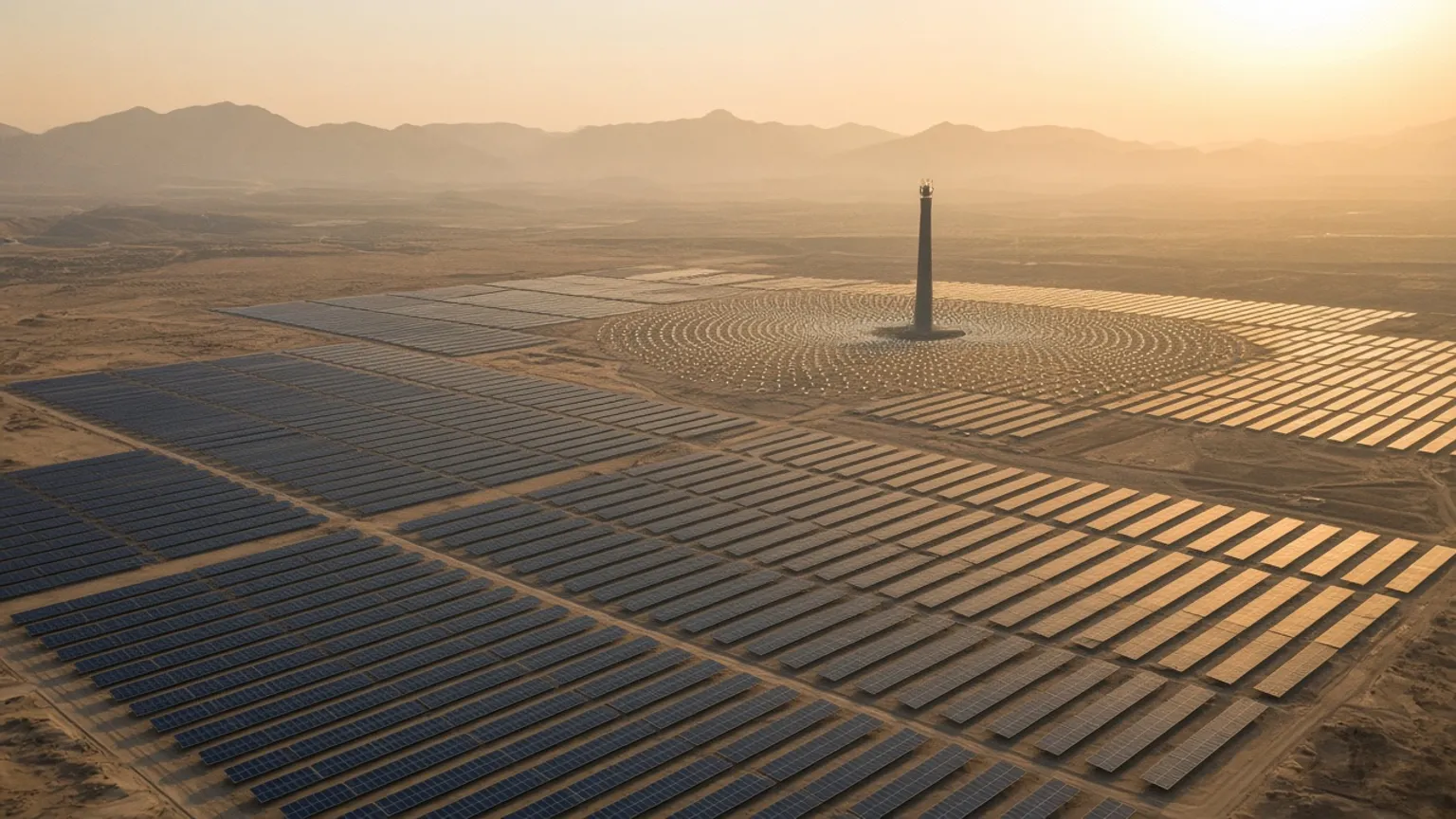
China passed 1,000 GW of solar in 2025 and Europe’s 2030 renewables goal is 42.5%. Dubai’s 4,660 MW park and 36% target are serious, but its ClimateTech success will be judged by paid deployment, not announcements.
The Zevin Intelligence Journal
Published
Editor's introduction
Dubai's ClimateTech opportunity extends beyond clean power generation. Its energy infrastructure, investment platforms and innovation programmes offer a foundation for companies developing storage, efficient cooling, green hydrogen and lower-carbon industrial solutions. The next challenge is commercial execution: connecting technology providers with customers, financing and measurable results.
Global context matters. China’s installed solar capacity passed 1,000 GW in May 2025, according to its National Energy Administration; the EU’s binding 2030 renewables goal is at least 42.5% of gross final energy consumption; and Saudi Arabia’s NEOM Green Hydrogen project is building about 2.2 GW of electrolysers. Against that backdrop, Dubai’s 4,660 MW solar park, its 36% clean-energy target for 2030 and its solar-hydrogen pilot are credible, but they are a regional hub’s portfolio, not a global-scale build-out. That is why the test for investors is deployment: contracts signed, capacity commissioned and results verified.
The building blocks
Dubai has assembled important building blocks for a ClimateTech ecosystem: large-scale clean-energy infrastructure, investment institutions and programmes connecting innovators with industry. These initiatives create opportunities, but infrastructure targets and funding announcements alone do not demonstrate commercial success.
Our position
Our editorial position is straightforward: the next phase should prioritise paid pilots with clear purchasing pathways. Each deployment should establish a baseline, measure its results and identify the conditions under which a customer will expand adoption.
What founders owe buyers
For founders, that means presenting more than a sustainability narrative. A credible proposal should explain the customer's problem, installation requirements, operating economics and how energy savings or emissions reductions will be verified.
The investor's question
For investors and corporate buyers, the question should move from "Is this technology promising?" to "What evidence would justify deploying it at scale?"
Proposed series, not an existing partnership
As part of this edition, the Journal proposes a follow-up editorial series, the Dubai ClimateTech Deployment Series. It is a proposal, not an existing programme or an agreed partnership. Company Spotlight would profile a company with a defined product, target customer and verifiable results. Pilot to Scale would cover pilots, costs, procurement barriers and the path to commercial deployment. Capital Meets Climate would interview investors and buyers about their terms for investment and adoption. Measured Impact would examine energy savings, emissions reductions and payback periods, keeping forecasts separate from actual results.
Sources
- DIFC, 'Dubai Future District Fund Unveils Ambitious Commitment', published 5 December 2023 · difc.com
- MBRSIC, 'DEWA's Sustainability and Innovation Centre supports sustainability through an integrated multi-layered approach', 6 January 2026 · mbrsic.ae
- UAE Government portal (u.ae), 'Dubai Clean Energy Strategy', text provided by DEWA, updated 4 June 2026 · u.ae
- Emirates News Agency (WAM), 'World Energy Day highlights Dubai's global vision to enhance energy security, sustainability', 22 October 2026 · wam.ae